



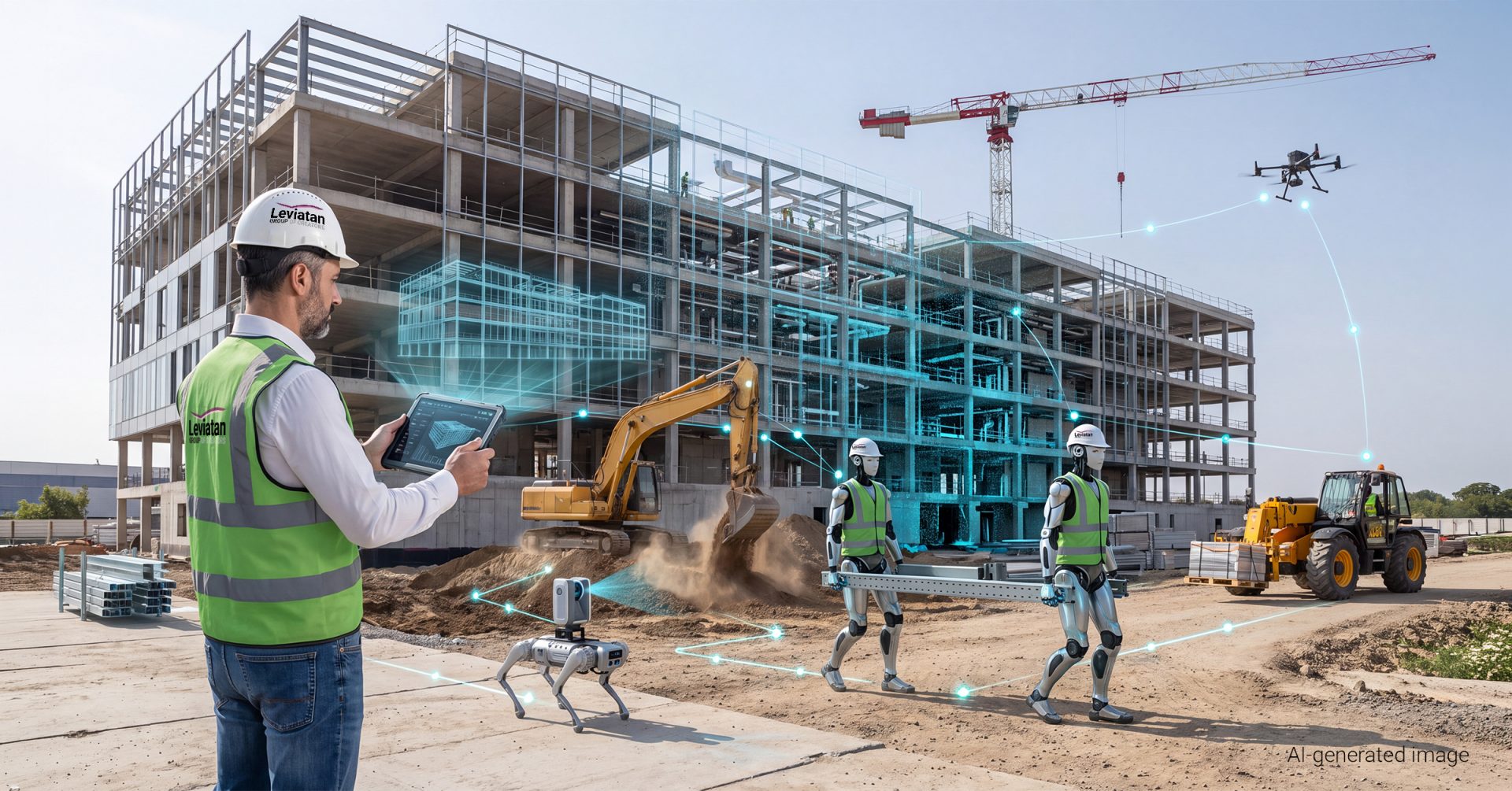

How Technology Supports Cost, Schedule, and Quality Management in Construction
In construction projects, costs, deadlines, and quality cannot be managed separately. Technical changes can impact the budget, affect scheduling, and lead to changes in site organization. At the same time, an inconsistency discovered too late can cause delays and additional costs, and the lack of clear, up-to-date information can hinder decision-making. That is precisely why effective project management increasingly depends on the ability to correlate data, identify risks early, and continuously monitor progress during the design and construction phases.
Technology does not eliminate a project’s complexity, but it can make it easier to manage. Digital models, automation, simulations, and data collected from the field can provide a more coherent picture of the project and support better-informed decisions.
Data provides a clearer picture of the project
In complex projects, information is one of the essential resources. Costs, quantities, deadlines, project changes, and on-site conditions must be constantly synchronized so teams can work with the same data.
When this information is managed in separate systems, the risk of inconsistencies increases. In contrast, clear data flows, traceable decisions, and specialized teams working within the same digital model enable faster risk identification and better management of project complexity.
BIM models can link technical information with data on quantities, costs, and scheduling, and updating them allows for a faster assessment of the effects of a change. An article in Construction Dive highlights this use of BIM, showing that when cost and scheduling data are linked to the model, it is possible to assess the impact of design changes on the budget and schedule.
Problems can be identified before they have an impact on the construction site
A major advantage of digitalization is the ability to identify early on situations that could become costly during construction. According to an article published by Autodesk, clash management involves identifying and resolving spatial conflicts between a building’s components in a BIM model before they reach the construction site. Digital simulations and checks can thus highlight conflicts between trades, differences between design alternatives, or difficulties that, in a traditional process, might not become apparent until construction begins.
This approach shifts the focus from reaction to prevention. Instead of teams having to correct a problem after it arises, they can analyze information early, when there are more options for intervention and the cost of change is easier to control.
Progress can be verified against the project
Quality control also involves continuously verifying how the project is being implemented. Technologies such as 3D scanning allow accurate capture of on-site conditions and comparison with the designed model.
Point clouds obtained through scanning can highlight any deviations even during construction, so that quality control is not limited to the end of the project. Reports generated based on this data can identify areas requiring analysis and support corrective action before nonconformity affects subsequent stages.
Automation supports the speed and consistency of processes
In a project involving large volumes of information, some tasks can be automated: updating data, processing information, comparing options, or generating analyses. Automation reduces manual effort and can help maintain more consistent processes.
According to an article in Engineering.com, automation can take over repetitive tasks in BIM processes, such as quality checks and data extraction from digital models.
The benefit isn’t just about speed. When data is connected and processes are tracked within a cohesive system, teams can make decisions based on a complete picture of the project.
Ultimately, technology isn’t an end. Its value lies in its ability to transform data into actionable insights and to create greater predictability regarding costs, deadlines, and quality. In a field where every change can have a ripple effect, control means, above all, being able to see what’s coming ahead of time and having the information needed to intervene promptly.


Comments are closed