




Holistic Digital Twin in Construction, Explained in 3 Simple Steps
Listen to this article
Provider: Elevenlabs
Article narration
0:00 / 0:00
Voce generată cu AI.
A building generates a large volume of information starting from the design phase: digital models, technical specifications, quantities, and solutions for architecture, structure, and systems. During construction, field data, changes, inspections, and scans are also generated. After handover, information about the building is needed for operation, maintenance, repairs, and upgrades.
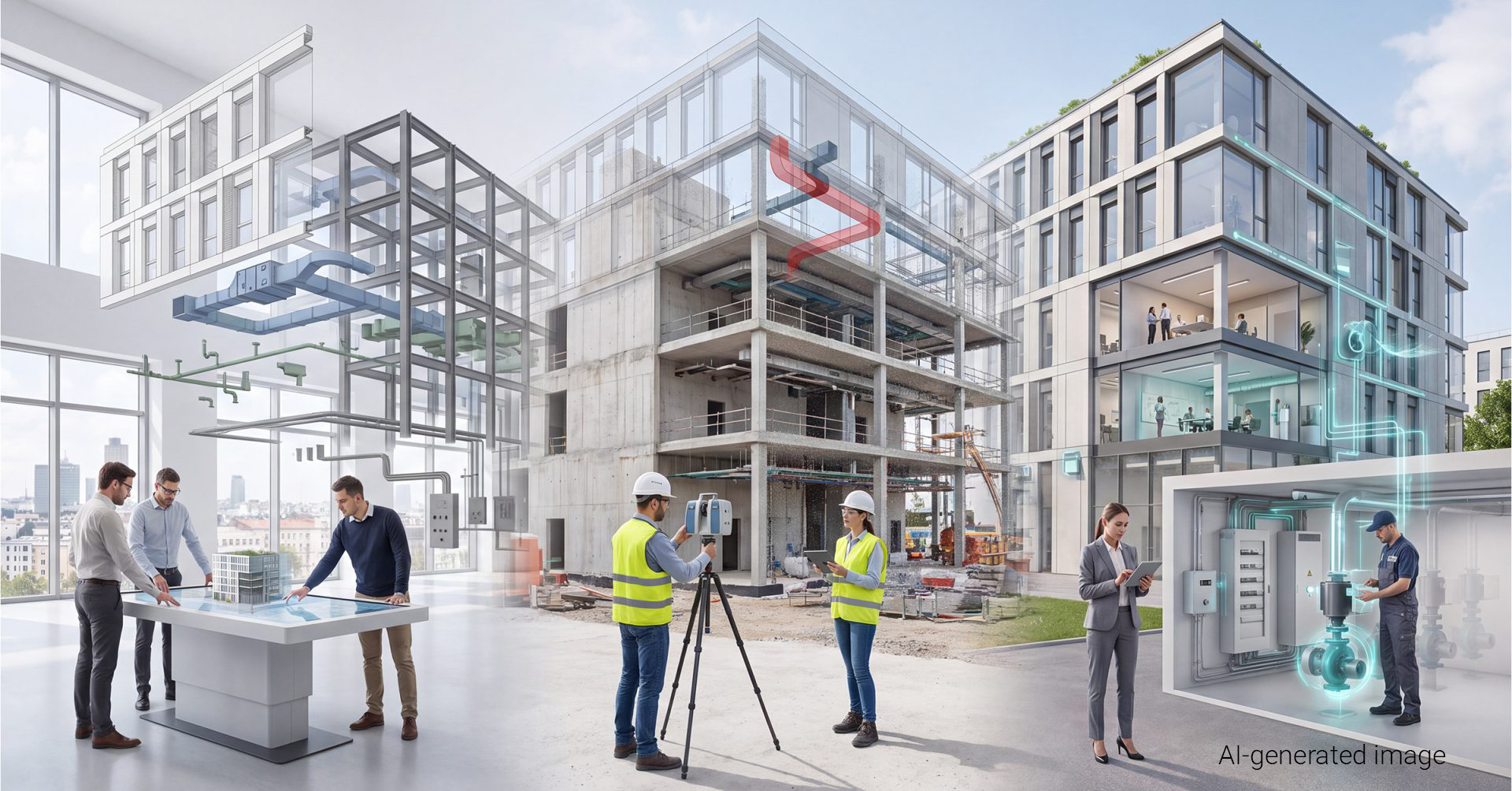
The Holistic Digital Twin is more than just a digital representation of the building. The concept brings together the designed and constructed model, technical data, the history of interventions, and the information needed for maintenance and operation into a single interface. During construction, the model can be supplemented with scans taken at specific project phases, and the resulting information can be used later during operation.
Step 1: Information is managed starting from the design phase
The starting point is the BIM model and the information associated with it. BIM allows architects and structural and MEP engineers to work on the same digital model, ensuring that information is integrated and that any conflicts between disciplines can be identified before construction begins.
Requirements and changes that arise along the way can also be tracked starting from the design phase. In complex projects, traceability of specifications even allows tracking the reason a particular decision was made or a solution was changed.
Thus, the information necessary for the project is integrated even before construction begins and can be tracked as solutions are developed and updated.
Step 2: Site data supplements the construction information
During the construction phase, 3D scanning captures the actual on-site conditions at various stages of the work. The resulting point clouds can be compared with the design model, allowing any deviations to be identified as construction progresses.
Scans performed in stages thus contribute to verifying the work, and the final scan can serve as the basis for the as-built model. The data obtained can subsequently form the basis for creating the Digital Twin and for managing the building during its operational life.
In addition, scans performed at specific stages allow for the preservation of information about the on-site conditions at various points during construction, including elements and installations that are no longer visible later.
Step 3: The information can be used for operations and maintenance
After acceptance, quick access to the information generated during the design and construction phases becomes important for the building’s operation. The client can access information about the project, the on-site situation, specifications, and items needed for maintenance or repairs.
For example, data retained from the construction phase can help locate a component that is no longer visible, consult technical specifications, and identify the product needed for a repair.
During the operation phase, information from sensors can also be integrated into the same interface and used, among other things, to optimize energy consumption.
Consequently, the information generated during the design and construction phases remains useful even after the project is accepted. It can be accessed later for operation, maintenance, modifications, and upgrades, which is one of the key benefits of the Holistic Digital Twin concept.

Comments are closed