



The first organization in Eastern Europe with triple BSI Kitemark certification for BIM, ready for the Physical AI era
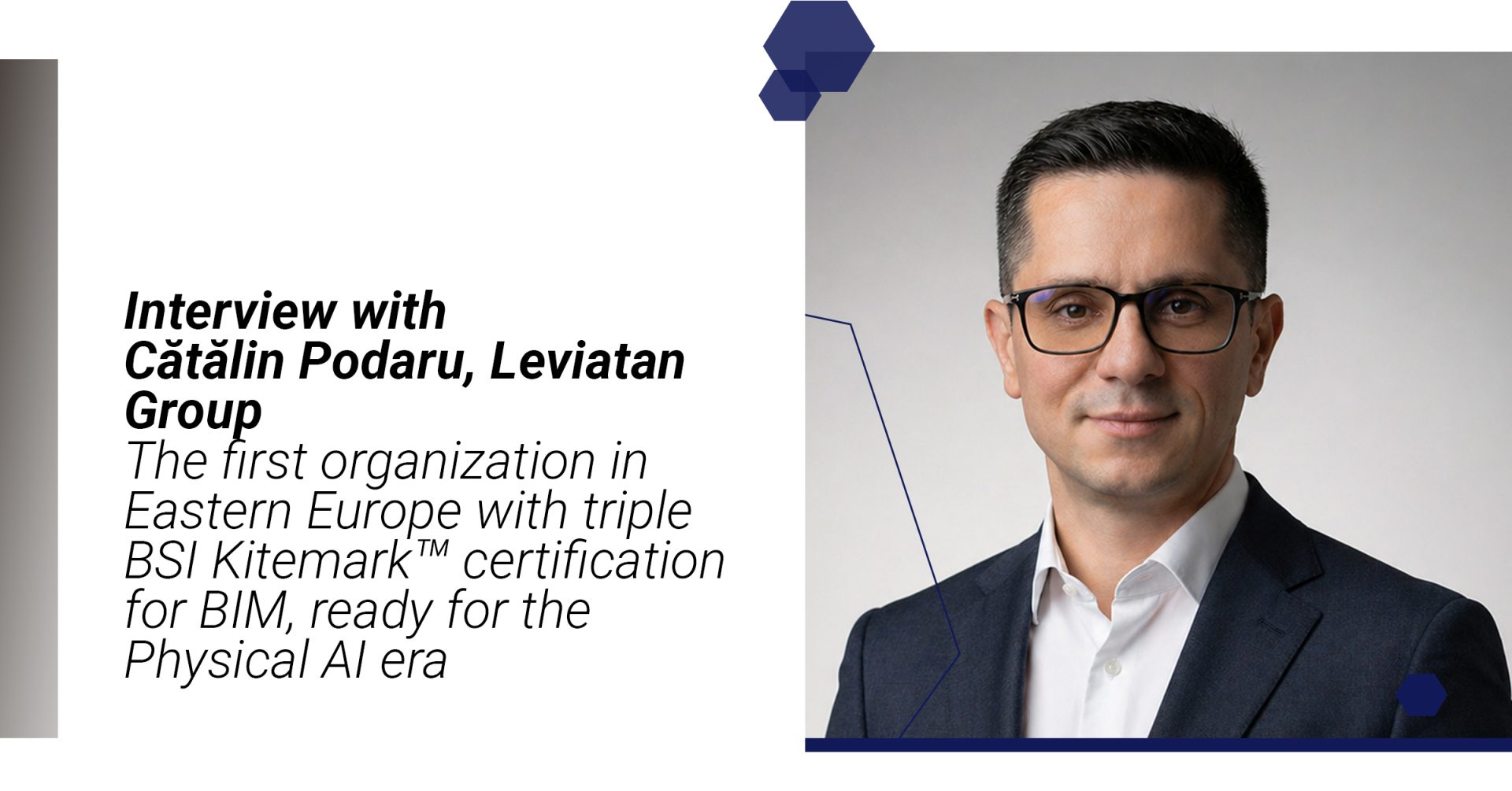
Seven tenders won, and projects worth more than 650 million RON in mobility, healthcare and defense: for Leviatan Group, 2025 brought both results and a strategic recalibration. In the interview published in the 2026 edition of the TOP 100 Most Powerful Architecture Firms magazine, printed by the agency IBC Focus, Cătălin Podaru, Founder and CEO of Leviatan Group, spoke about the triple BSI Kitemark™ for BIM certification obtained by Leviatan Group, the investments in people and education, and the group’s preparation for the Physical AI era.
2025 was a highly visible year for Leviatan Group, both in terms of projects and market positioning. What did the year look like from inside your group of companies?
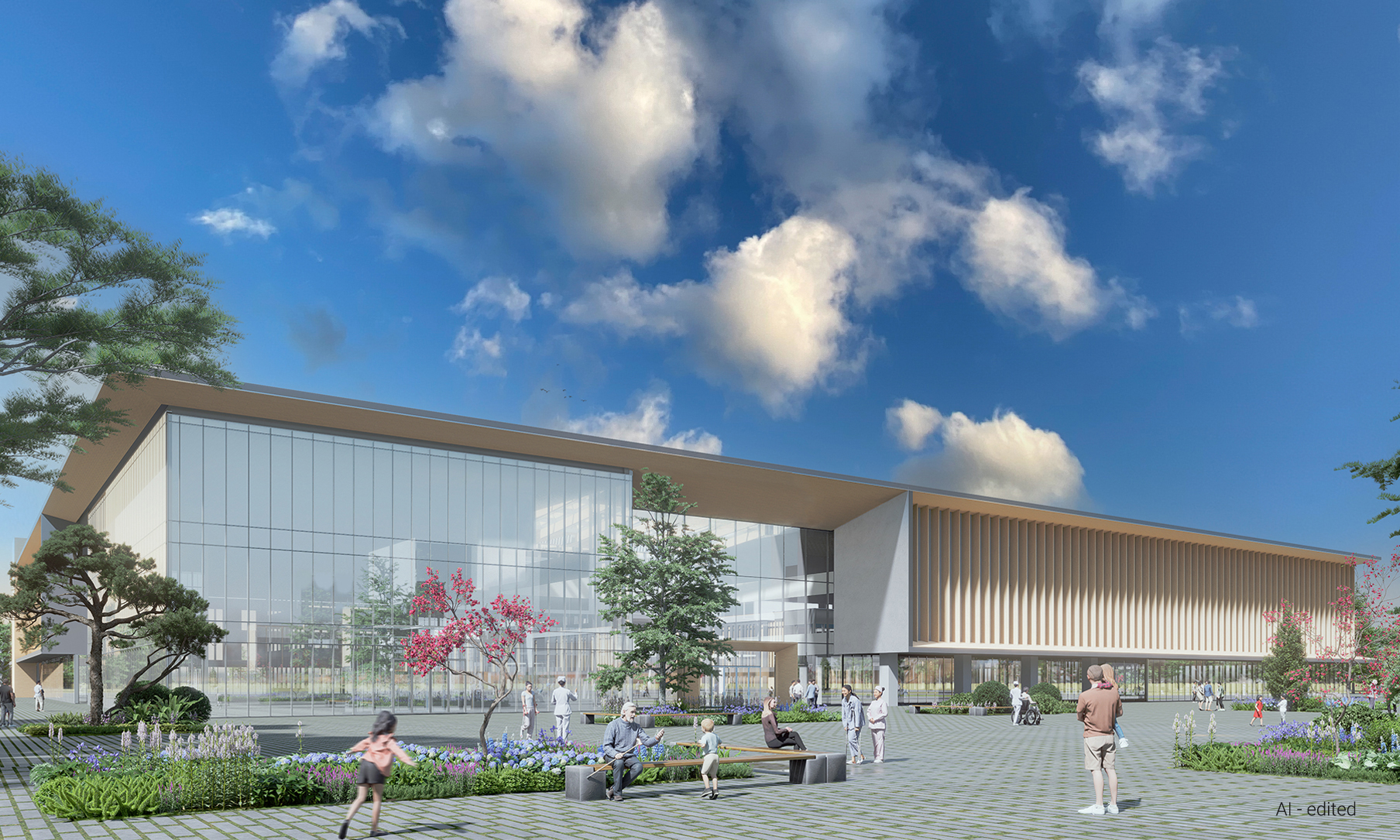
From the inside, 2025 was a year of consolidation and strategic recalibration for Leviatan Group, in a difficult and unpredictable market. We focused on public and special projects with a high degree of complexity and real impact; we completed key projects in the security and defense sector, and we added large-scale projects to our portfolio, such as the new Clinical Hospital of Pneumophthisiology and Infectious Diseases in Brasov. In total, we won seven major tenders, worth more than 650 million RON.
At the same time, 2025 was an important year for the group’s internal transformation. We continued to integrate automation, artificial intelligence, and unified data management into real workflows, so these solutions directly support our specialists’ work rather than remaining mere R&D initiatives. We invested in AI literacy, in developing new ways of working, and in internal transformation projects treated with the same seriousness as business projects, to increase the speed, accuracy, and quality of our processes.
Last year was therefore one in which we strengthened the foundation for the next stage of development: a better-calibrated portfolio, more mature processes and a working model in which technology becomes part of everyday activity. At the same time, people remain at the center of the transformation.
Leviatan Group has grown during a period when the construction industry faced inflation, cost pressure, staff shortages, and accelerating digitalization all at once. What has become harder to control in a construction business: cost, time or complexity?
In a construction business, complexity has become the hardest thing to control, because it concentrates and amplifies the pressure on cost and time. Today’s projects involve large volumes of data, increasingly sophisticated technical and security requirements, coordination between numerous disciplines and decisions that must be made quickly without compromising quality. In Leviatan Group’s case, growth has been reflected in organizational maturity, consolidated expertise and the capacity to manage complex projects in an integrated way, and the international BSI Kitemark™ for BIM and Top Employer certifications confirm this evolution at the operational and technological level as well as in the development of the organization and its people.
Which flagship projects are you currently working on, and which of them best define the direction in which Leviatan Group is heading?
At present, three projects best define the direction in which our group of companies is heading: the design of the new terminal at Henri Coanda International Airport, the development of the Clinical Hospital of Pneumophthisiology and Infectious Diseases in Brasov, and the final phase of the infrastructure expansion for the Headquarters Multinational Corps South-East in Sibiu.

Together, they cover three areas essential to Romania’s development and security – mobility, healthcare and defense – and reflect our group’s ability to manage large-scale projects with demanding technical and operational requirements. These projects go beyond delivering buildings; they contribute directly to how Romania will function in the coming decades, through infrastructure that is modern, safe, and adapted to society’s real needs.
Leviatan Group has become the first organization in Eastern Europe to hold triple BSI Kitemark™ certification for BIM. What does this certification say about the real maturity of the local market, and how big is the difference, in practice, between companies that use BIM and those built around it?
This certification shows that the local market should not be viewed as uniform. Romania still has a fragmented level of BIM adoption, but it also has organizations capable of meeting the most demanding international standards before the methodology becomes mandatory for public projects. For us, the triple BSI Kitemark™ for BIM certification in design, construction and information security management does not validate the mere use of software. Instead, it verifies the maturity of a working system on real projects, in line with the ISO 19650 standards. The audit examined workflows, procedures, ongoing projects, and the concrete way information is managed, and this rigor is essential for separating declared adoption from real implementation.
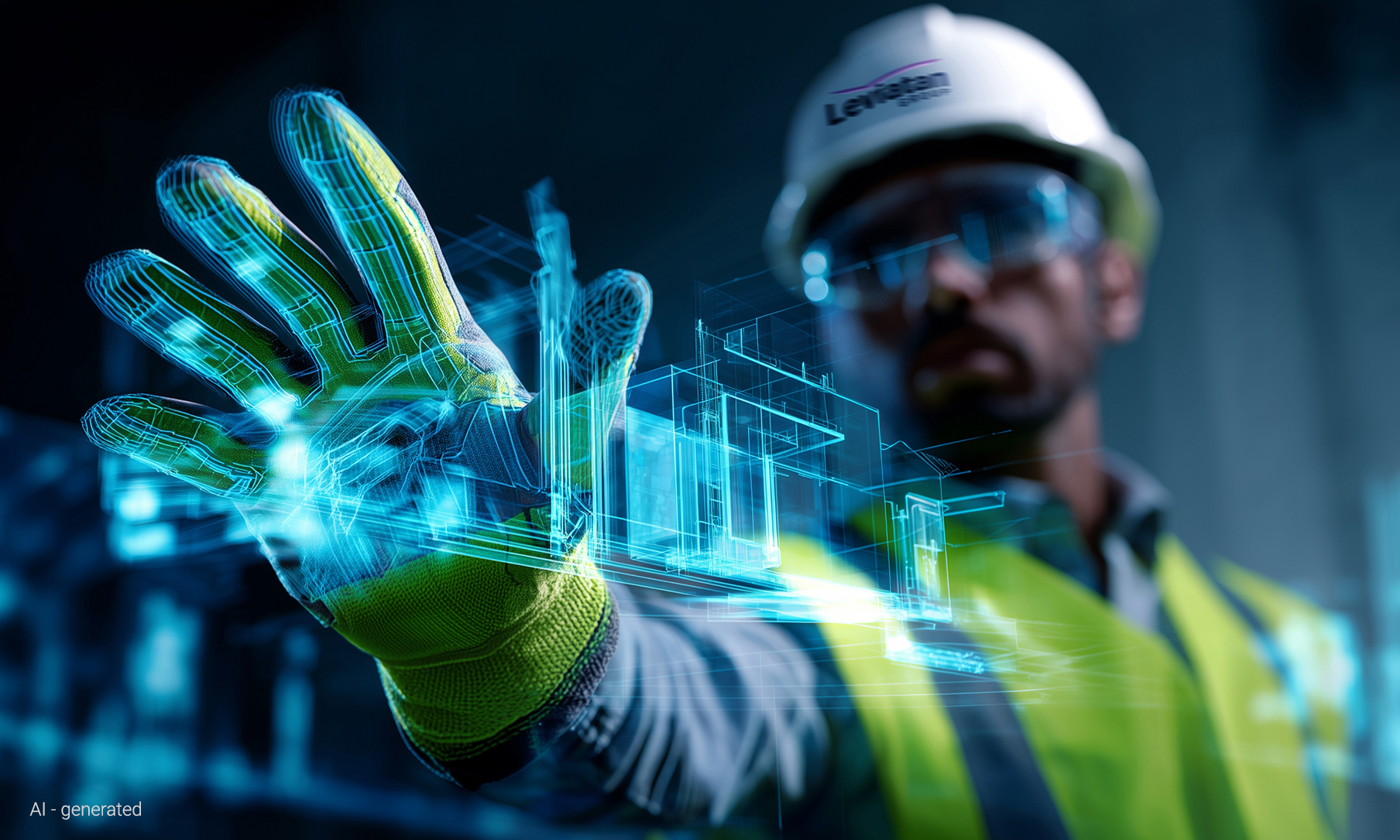
The difference between a company that uses BIM and one built around it is, in practice, very large. In the first case, BIM may remain a modelling tool used by one department or only at a certain stage. In the second, information becomes the continuous thread of the entire project: architects, engineers, contractors and the client work in a common data environment, clashes are identified before work reaches the site, decisions are traceable, and the model is kept up to date through to handover and can subsequently support the operation and maintenance of the building. We are no longer talking only about a 3D model, but about a way of organizing the company, its responsibilities and its decisions.
For the client, this difference translates into fewer errors and surprises, better control over costs and deadlines, secure information and greater predictability across the entire life cycle of the investment. In Leviatan Group’s case, integrating BIM into design and construction has supported the delivery of strategic and complex projects, including ahead of schedule, which shows that digital maturity has operational effects, not just reputational ones.
The certification therefore says two things about the Romanian market: that the gap with mature markets can be closed, and that the next stage can no longer be only about “using BIM”. What is really at stake is building organizations in which BIM becomes the shared infrastructure of design, construction and information management.
The launch of Asociația Leviatan comes at a time when most companies talk about ESG and social impact almost exclusively in terms of reporting and image. Why did you choose such a broad and committed direction?
We chose this direction because, in our view, social impact should be neither an extension of business communications nor a one-off reporting exercise. Over time, Leviatan Group has supported initiatives in education, culture, healthcare, and the security and defense sector, and the launch of Asociația Leviatan is the natural step to bring these efforts together in a coherent framework, with clear objectives, continuity, and the capacity to produce real effects in society.
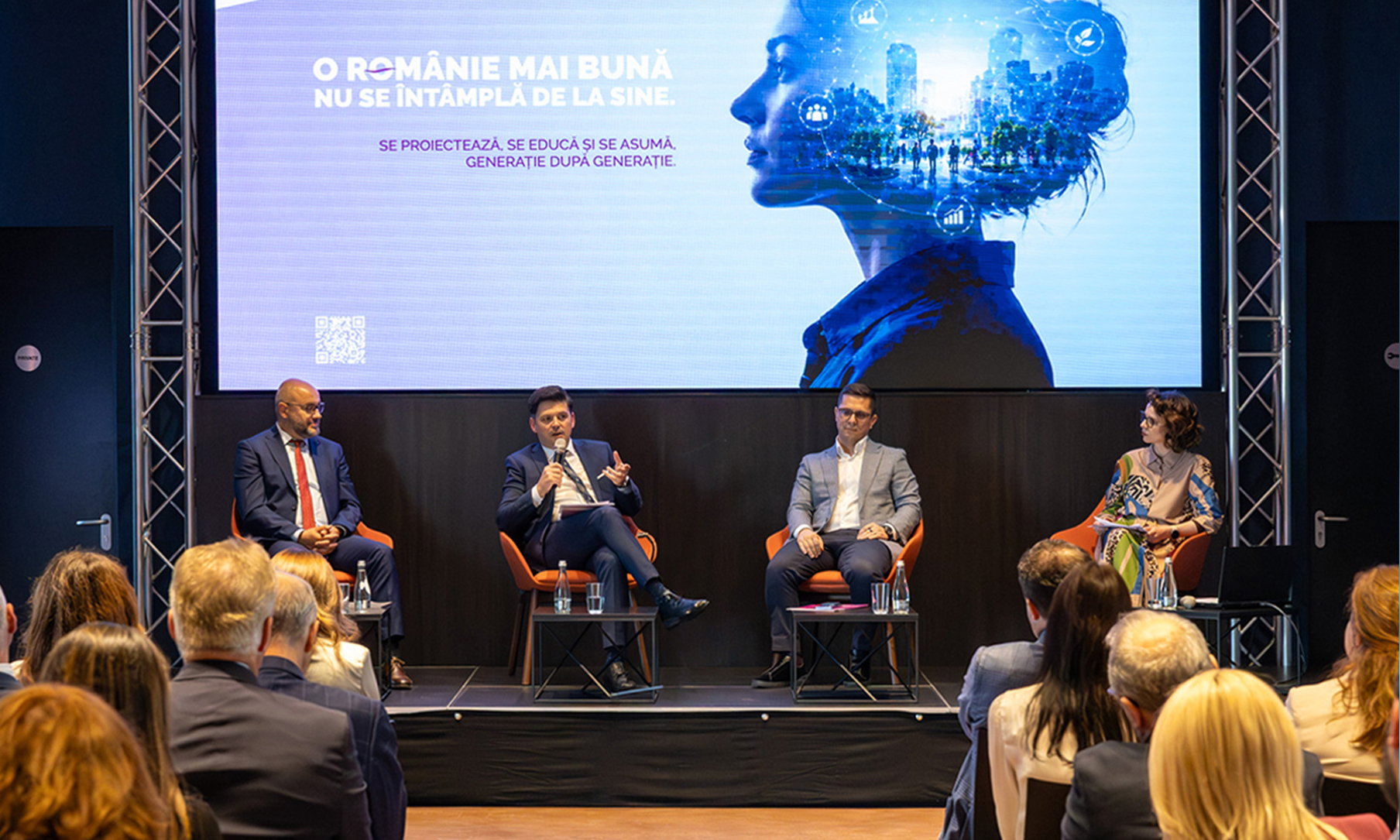
Underlying this decision is the conviction that every organization is part of a wider ecosystem and has a responsibility towards the community in which it operates. When people, companies, educational institutions and social partners act responsibly and in connection with one another, they can together generate value, well-being and progress. That is why we chose to support areas we consider essential to society’s development: leadership, education, culture, security and defense.
The Association allows us to take these values beyond the group’s activity and turn them into better-articulated initiatives, developed together with specialists, institutions and partners from different fields. For us, commitment does not mean declaring an impact, but building mechanisms through which it can be consistently sustained, assessed over time and multiplied in the community.
You recently launched the Academy of Excellence as a Daily Business (AECO), at a time when the industry is talking more about the shortage of specialists and the need for real training. What was behind this initiative, and what are you trying to build through it?
AECO grew out of a need we see directly in our projects: the industry is short not only of people, but above all of specialists able to work in an integrated, digital and predictable way. In Romania, there is more talk about BIM. Yet implementation remains fragmented, and differences in maturity between designers, contractors, consultants, and authorities lead to inconsistencies, information loss, and coordination difficulties. Our experience has shown us that technology alone is not enough; performance emerges when processes, responsibilities and ways of working are aligned.
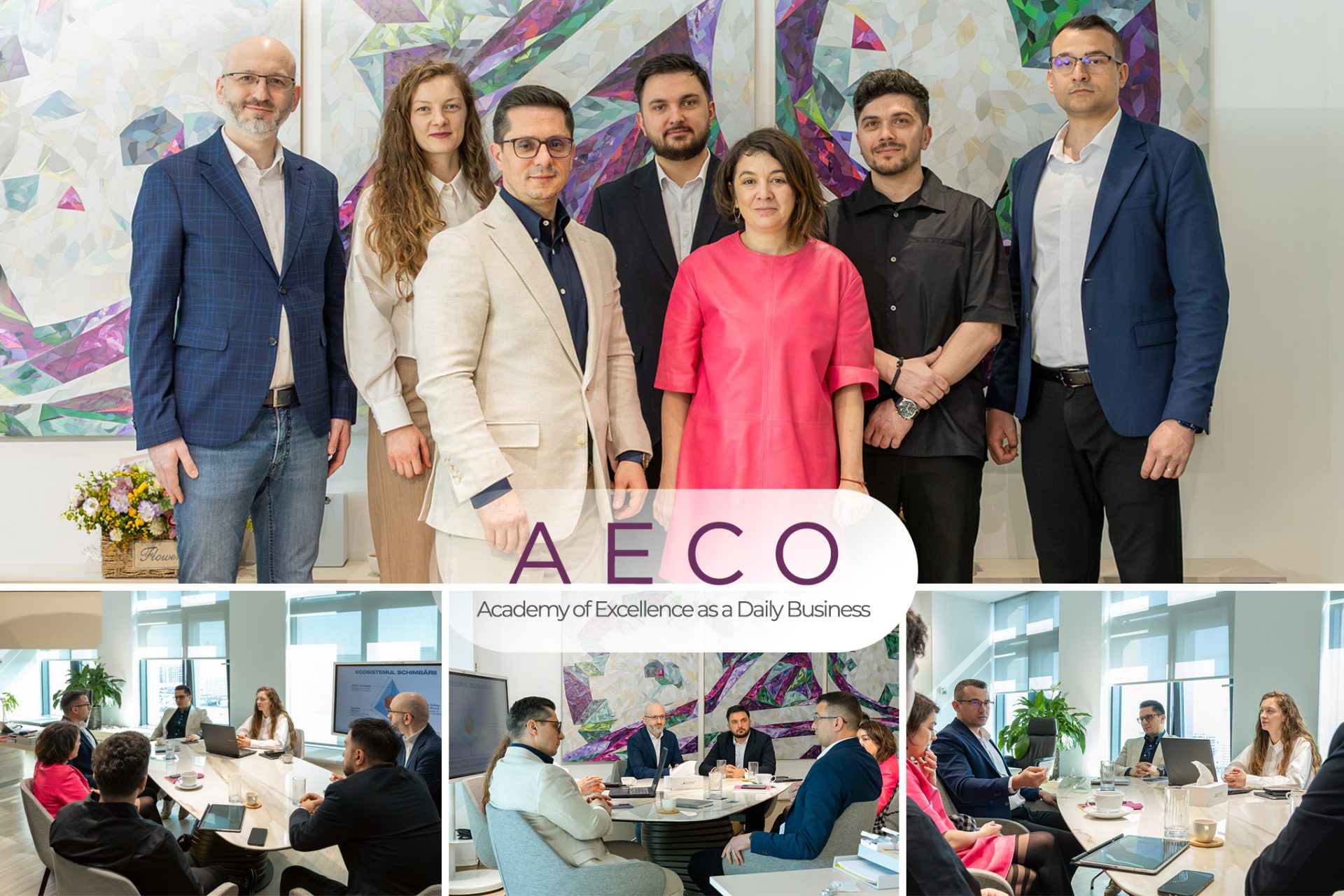
Through AECO, we are building a common framework in which professionals from the private sector and representatives of public authorities can learn from real projects and speak the same digital language. The Academy brings together complementary expertise from design, construction, supervision, technology, and the legal field, so BIM is understood and applied throughout the entire course of a project, from defining requirements and procurement to construction, operation, and maintenance. The emphasis will be on practical programmes, case studies, professional certification and best-practice guides that clarify roles and reduce the grey areas in complex projects.
For Leviatan Group, AECO is also a form of responsibility towards the industry. The BSI Kitemark™ for BIM certification confirmed to us that digital excellence is built through consistency, processes and well-prepared people, not merely by purchasing tools. That is why we want the experience gained on complex projects not to remain within the group alone, but to help shape a more mature, more coherent, and more competitive market, where best practice becomes the standard, not the exception.
Leadership, education, and organizational culture are not immediately visible in an execution-driven industry. Why have they become important for Leviatan Group?
Leadership, education, and organizational culture have become essential for Leviatan Group because we work in an industry where the result depends on coordination among people with very different specializations, rhythms, and perspectives. Technology can be purchased and learned, but culture is built over time. In a Design & Build group, where architects, engineers, construction teams, support staff, and management must work to the same benchmarks, performance cannot be sustained by technical competence alone. It requires a common language about quality, predictability, collaboration and ownership.
That is why we have consistently invested in developing leaders, continuous learning, and real mechanisms for dialogue, feedback, and recognition. We have shifted the emphasis from formal, once-a-year appraisal to recurring conversations, aligned objectives and shared responsibility at team level. In parallel, we have built organizational transformation programmes anchored in real work situations, so that people understand why change is necessary and can integrate it into their day-to-day work. The results are visible not only in the indicators, but also in how colleagues communicate, collaborate, and approach problems: less by looking for someone to blame and more by finding solutions.
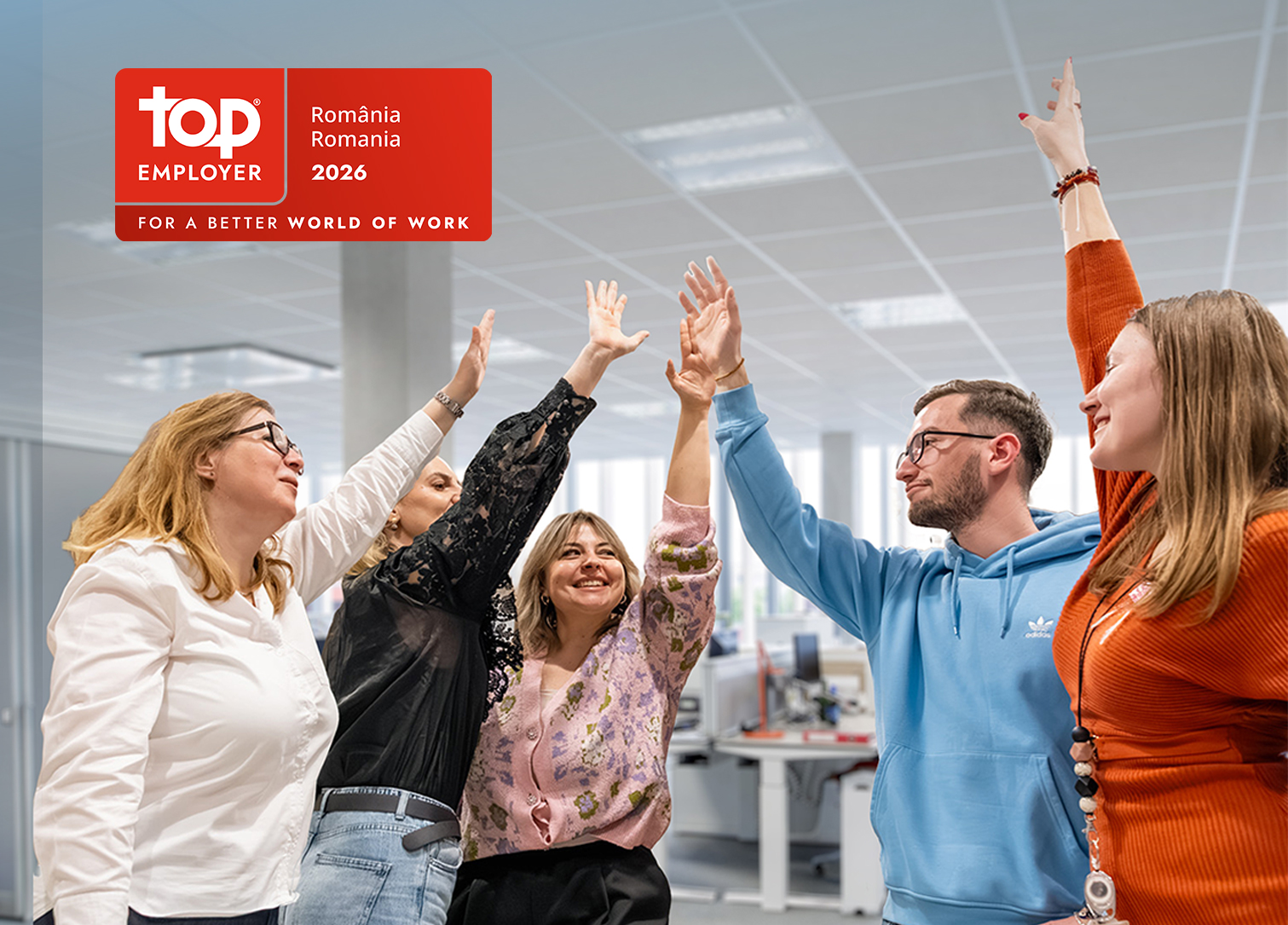
The Top Employer certification, awarded to our group of companies by the Top Employers Institute in 2025 and 2026, is for us an external validation of this journey, measured against an international benchmark, not an image trophy. It confirms the maturity of the processes through which people are supported to learn, grow, and contribute to an environment based on clarity, trust, and respect. In an industry with intense pressure on deadlines, costs and technical responsibility, it is precisely these elements that make the difference between an organization that merely delivers projects and one capable of building performance sustainably.
What are the most important strategic directions for Leviatan Group in the period ahead?
Leviatan Group’s most important strategic directions center on continuing to develop and diversify its project portfolio. We are focusing on complex projects that respond to real societal needs and can strengthen, over the long term, the group’s role in developing investments essential for Romania.
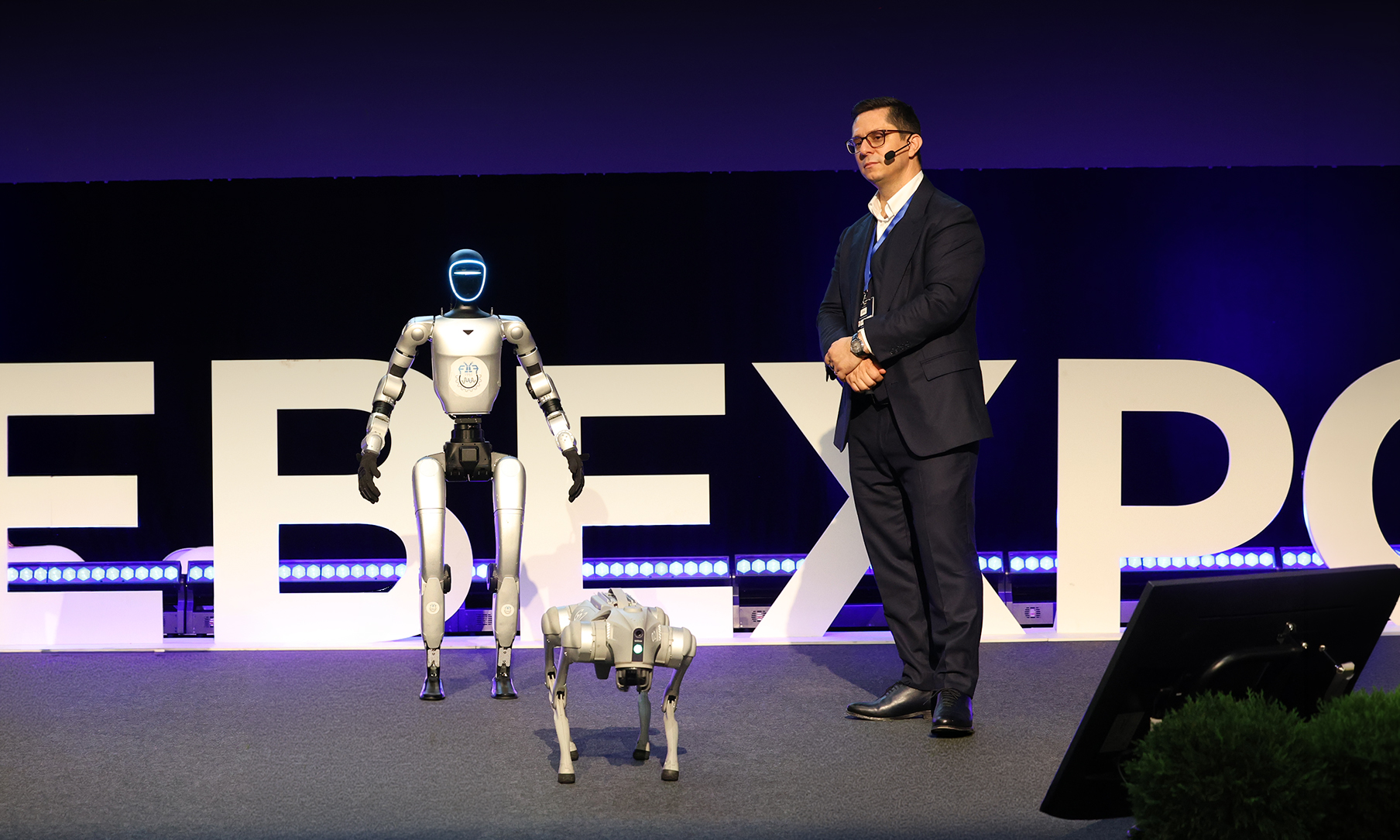
In parallel, we are continuing the internal development projects that are transforming the way we work. We are expanding the use of artificial intelligence in the design process through Monada and developing role-based AI avatars and virtual assistants for the construction site, which provide quick access to information in BIM models and technical documentation. Alongside these come investments in automation, the team’s digital skills, and preparation for Physical AI and robotics.
Interview published in the 2026 edition of TOP 100 Most Powerful Architecture Firms magazine, printed by IBC Focus.
Comments are closed