





5 Signs You’re Working in a Team with Genuine Psychological Safety
Can you say “I don’t know” in a meeting without fear of being judged? Can you bring up a problem, ask for help, or propose an idea that contradicts the majority opinion? The answers to these questions say a lot about the psychological safety within a team.
The concept became a key benchmark in organizational studies following the research of Amy C. Edmondson, a professor at Harvard Business School. In a study published in 1999 in Administrative Science Quarterly, Edmondson defined psychological safety at the team level as the shared belief that the environment allows for interpersonal risk-taking. The research, conducted on 51 teams, highlighted the link between psychological safety and the behaviors through which people learn together.
In practice, psychological safety does not mean the absence of high standards, disagreements, or difficult conversations. It means that people can engage in these conversations without fear that a question, an admitted mistake, or a differing opinion will damage their reputation among their colleagues.
How can you tell if this principle is truly part of an organization’s culture?
1. You can admit you were wrong without immediately looking for an excuse
In a team with genuine psychological safety, mistakes aren’t hidden out of fear of others’ reactions. People can point out what didn’t work, analyze the causes, and help find a solution.
This doesn’t mean that mistakes have no consequences or that individual responsibility disappears. The difference lies in how the team responds: the focus shifts from assigning blame to understanding the situation and preventing it from happening again. In this way, transparency becomes part of the learning process.
2. Questions Are Seen as a Form of Engagement
“Can you explain this to me?”, “Why do we do it this way?”, or “Can you help me?” are natural questions in an environment where people feel safe admitting that they don’t have all the answers.
When colleagues don’t feel the need to prove that they know everything constantly, information flows more easily, and collaboration becomes more effective. Asking for help doesn’t diminish professional competence; rather, it demonstrates a willingness to learn and to find the right solution together with others.
3. You can have a different opinion, even toward your manager
One of the clearest signs of psychological safety is when disagreement is not mistaken for a lack of respect.
In a healthy team, ideas can be analyzed, debated, and challenged regardless of the position of the person proposing them. A colleague can point out a risk, propose an alternative, or say they disagree with a decision without worrying that it will jeopardize their professional relationships.
For organizations, this openness is valuable because it allows different perspectives and relevant information to reach the decision-making table.
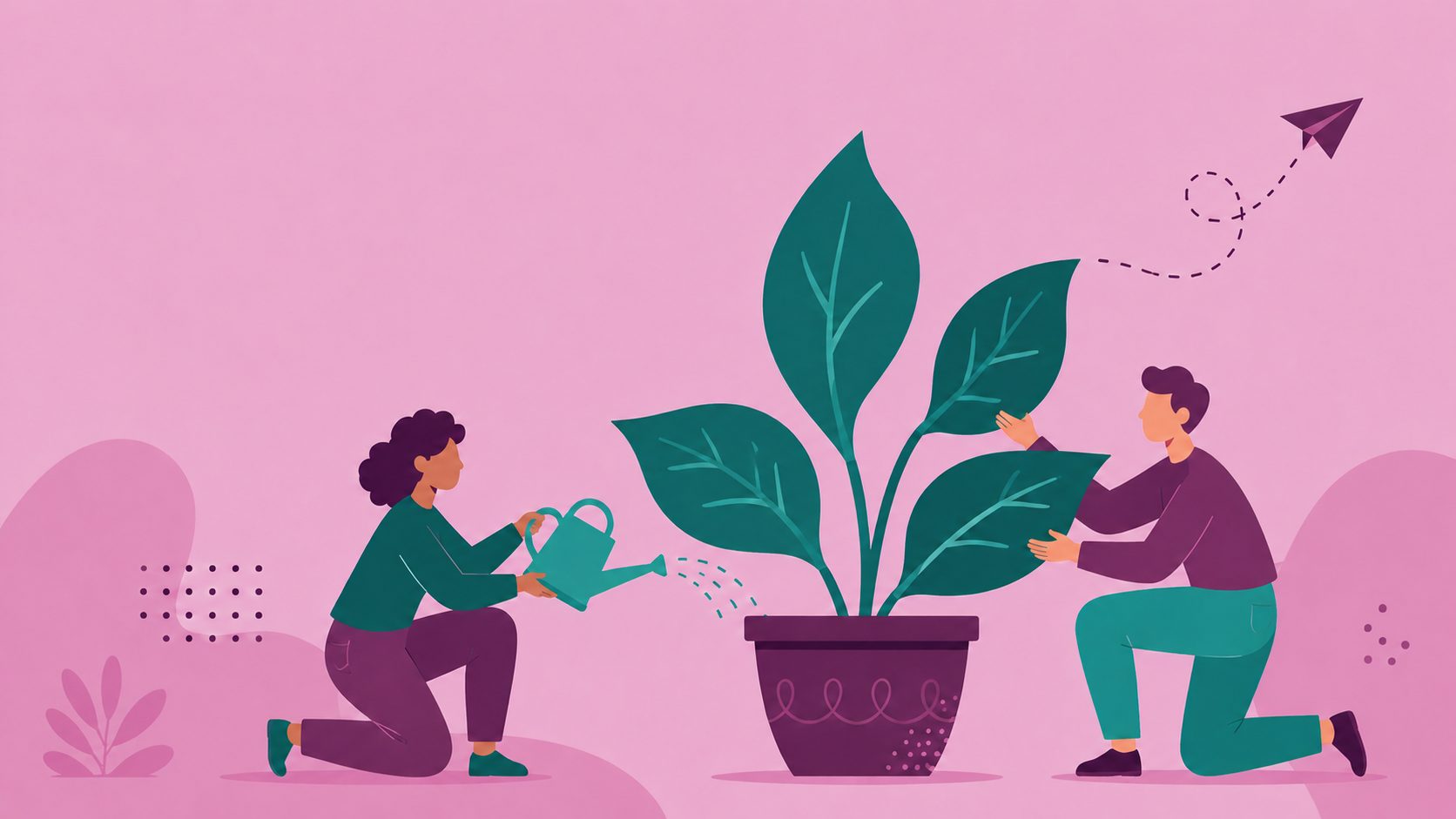
4. Feedback is a conversation, not just an evaluation
In an environment of psychological safety, feedback does not flow in only one direction.
People can discuss what is working, what is preventing them from doing their jobs effectively, or what could be improved. For their part, managers are not only responsible for providing feedback but must also be willing to listen.
Equally important is what happens after such a conversation. Psychological safety is strengthened when people see that their opinions are heard and treated with respect, even when not all suggestions can be implemented.
5. You don’t have to appear to have everything under control constantly
Perhaps the most subtle sign is the freedom to say, “I need help,” “I’m not sure,” or “I think we should double-check.”
In teams where professional vulnerability is penalized, people may end up hiding difficulties, avoiding questions, or withholding important information. In contrast, psychological safety creates the conditions in which problems can become visible early enough to be resolved.
Psychological safety isn’t built through a statement about organizational culture or a single initiative. It takes shape in everyday interactions: in how a question is received, in the reaction to a mistake, in the willingness to listen to a different opinion, and in the freedom to ask for help.
And here’s perhaps the simplest test: in a team with genuine psychological safety, people don’t waste energy trying to appear infallible. They can use that energy to contribute, collaborate, and improve together.

Comments are closed