




Robots Are Taking Over Construction Sites: What Tasks Will They Take On?
Robots are no longer just a technological demonstration. The new generations can interpret information from their surroundings, identify obstacles and people, and perform context-specific tasks. In construction, this evolution paves the way for a construction site where humans and robots will increasingly work together.
One of the first areas of application is construction site inspection. Robots can be equipped with cameras or 3D scanners and sent to collect information about the work being done, including in hard-to-reach areas. As a result, some of the inspections that currently require time, repeated trips, or expose people to risks can be performed automatically.
From Inspections to Autonomous Patrols
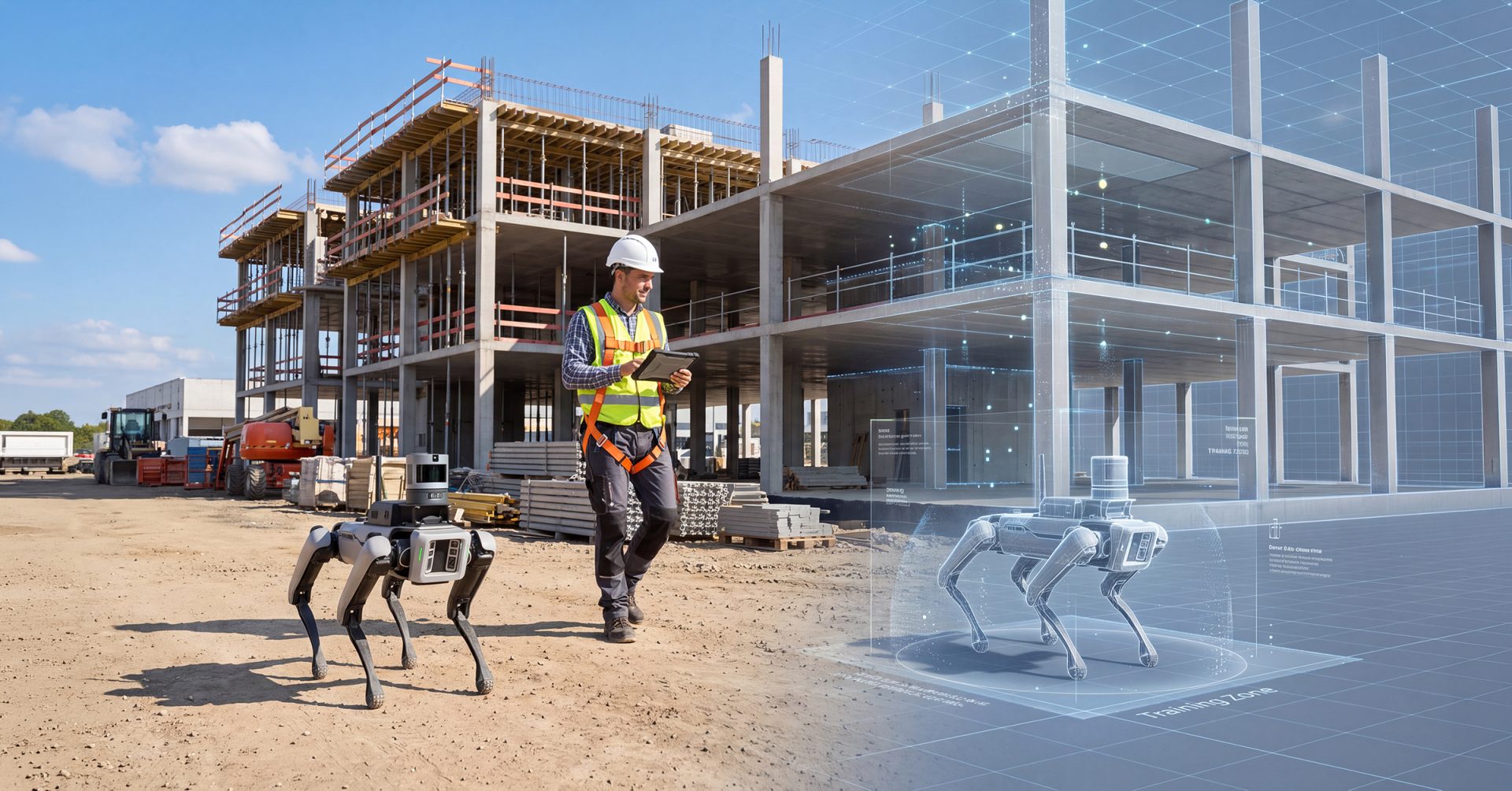
Quadruped robots are well-suited for navigating dynamic environments, such as construction sites. As technology advances, they can take on patrol missions, monitor specific areas, and periodically collect data on work progress.
Another important role is checking safety conditions. Robots can be trained to recognize people, personal protective equipment, and obstacles, and BIM models can be used as virtual training environments before they physically arrive on the construction site. In this way, robots can learn to navigate and respond to various situations in a controlled environment before being deployed in real-world conditions.
Robots Can Also Take Over Physical Labor
Another important area is automating physically demanding tasks. Transporting and handling materials, as well as other repetitive operations, can gradually be taken over by robots and automated systems, allowing specialists to focus more on tasks that require experience, coordination, and precision.
The goal is not to replace people. The construction industry is already facing a shortage of skilled workers, and robotics can help expand the capacity of existing teams, particularly for repetitive, difficult, or risky tasks.
A Construction Site Where Robots Learn Before They Work
An important element of this transformation is simulation. BIM models of buildings can become virtual environments where robots learn to navigate and respond to various situations before being deployed in the real world. Thus, their training does not begin directly on the construction site, but in a digital version of it.
In the long term, the trend is toward fleets of robots connected and monitored within a shared system, capable of taking over patrols, inspections, and, eventually, an increasing number of repetitive tasks.
Robots won’t transform construction sites overnight. But their gradual integration could mean greater safety, continuity, and quality control in an industry where technology is beginning to transition from the digital world to the physical one.


Comments are closed