



Construction Will Never Be the Same: The Holistic Digital Twin Revolution
A complex construction project must be planned with a view beyond the moment of completion. Decisions made as early as the conceptual phase influence not only the design and construction, but also how the building will be operated, maintained, modified, or modernized over time. For this reason, the client’s and users’ requirements, architectural, structural, and mechanical/electrical solutions, material and equipment specifications, as well as information generated later on-site must be managed coherently throughout the project.
This approach becomes more important for complex buildings, such as hospitals, where spaces, flows, systems, and equipment must be analyzed together. Operation and maintenance must be considered from the design phase onward. A building may meet requirements at the time of handover but, at the same time, become costly to operate if maintenance and operation were not considered from the design phase onward.
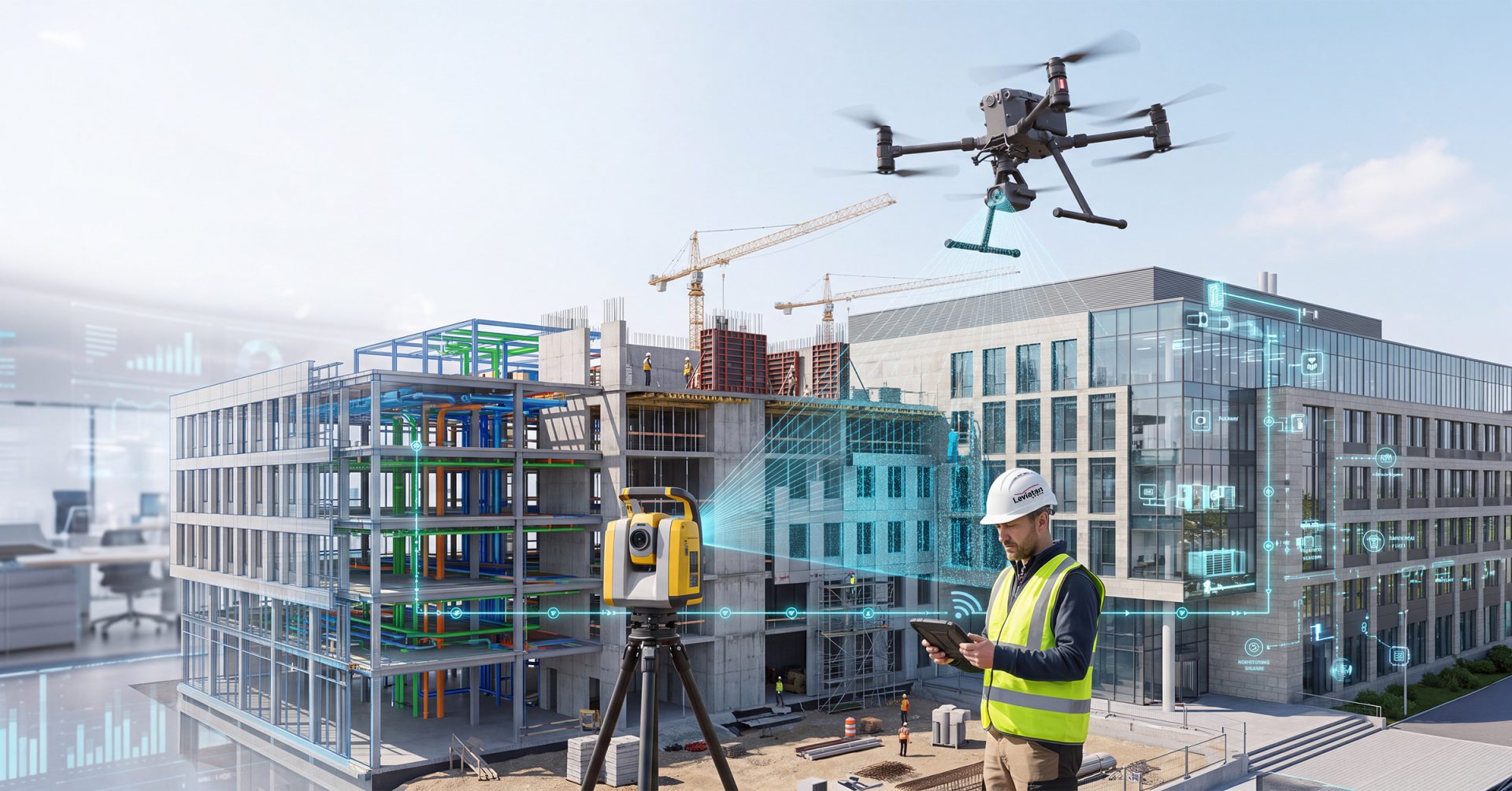
In this context, the Holistic Digital Twin is more than just a digital representation of the building. The concept brings together, within a single interface, the designed and constructed model, technical data, the history of interventions, and the information needed for maintenance and operation. During construction, the model can be supplemented with scans taken at specific stages of the project, so that the client can later access, during operation, both the design information and data on the actual on-site conditions.
It all starts with the concept phase
For the information to be usable later, it must be organized from the very beginning of the project. Requirements can be tracked across different spaces, whether they come from the client, users, or regulatory requirements, and changes can be integrated throughout the project’s development.
In complex projects, this traceability is also important when changes to equipment or specifications occur. The system allows changes to be tracked and information to be retained that explains why a particular decision was made or why a solution was modified.
Digital models can also be used for simulations and validations as early as the design phase. For complex buildings, seasonal variations and thermodynamic behavior can be analyzed in relation to the equipment to be installed.
Design and construction form the foundation of the information base
As the project progresses, information must be coordinated across disciplines and constantly updated. BIM models allow teams to work on the same digital model and help identify conflicts between disciplines before they reach the construction site.
During the construction phase, this information base is supplemented with field data. 3D scans taken at key points during construction allow for a comparison of the as-built condition with the design model and the early identification of any deviations. The final scan can serve as the basis for the as-built model, and the data obtained can subsequently contribute to the creation of the Digital Twin and to the management of the building during its operational life.
A key advantage is the ability to retain information about the on-site status at various stages of construction. During operation, the client can, for example, revisit a stage when the structure was completed or the installations were still visible and review the information associated with those specific elements.
Its usefulness becomes evident during operation and maintenance
After handover, quick access to project and field information can be of significant value for operations. The Holistic Digital Twin can bring together in a single interface information about the model, specifications, as-built status, and data needed for maintenance and interventions.
In practice, this can enable the rapid identification of a component that is no longer visible, the review of its technical specifications, and access to the information needed for repairs. Data retained from the construction phase can help precisely locate the component and identify the required product, reducing the time spent searching for information in documentation and conducting on-site verifications.
Also, during the operations phase, information from BMS systems, equipment, and sensors can be integrated into the same interface and used, among other things, to optimize energy consumption.
From building design to long-term management
Holistic Digital Twin connects phases that are traditionally treated separately. Requirements and decisions are tracked from the design phase, the actual situation is documented during construction, and the resulting information remains available for operation, maintenance, modifications, and upgrades.
For complex buildings, this continuity is important because the value of the project does not end at the time of acceptance. The way information from the concept, design, and construction phases is organized and stored directly influences the ability to quickly access the data needed for the building’s operation and maintenance.
Comments are closed